Hey everyone,
So this post is the product of way more time spent researching that I’d intended!
A few months ago I started noticing my dishwasher was leaving residue on everything. At first, I thought it was purely a chemical sensitivity reaction to the detergent, as the very first thing I noticed was that my throat would start hurting anytime I ate or drank anything.
But I started posting in various patient support groups, and someone there urged me not to assume that the problem was me, and instead consider that maybe the problem was actually the dishwasher itself not removing detergent properly.
So then I really started looking, and did notice the white streaks on everything I hadn’t noticed before.
Why did this happen?
I’d been living in this apartment for a few months. Why did it start having issues all of a sudden?
Well, it wasn’t necessarily so sudden. I’d often felt, living here, that our dishes didn’t get totally clean after running in the dishwasher, but usually I was able to solve the problem by repositioning things and running it again.
But at one point during the pandemic, I switched to using exclusively microfiber cloths instead of paper towels in the kitchen. In retrospect, I think I started putting a lot more food and grease than I had before in the dishwasher and down the drain, and this is what really pushed it over the edge.
So thus began about a month of trial and error before I finally sorted everything out.
After implementing all of the steps below, I’m finally able to feel safe using my cookware out of the dishwasher again, and without my throat hurting.
Make sure water is hot enough
I read a bunch of articles online, as well as the General Electric website, and found that the water really has to get up to a minimum of 120 degrees F in order to fully dissolve the detergent.
If the detergent doesn’t dissolve, then it can remain behind in that slime I was finding on all of my dishes.
I actually went out and bought a cooking thermometer, just to be scientific. I tested the temperature of the water on the bottom of the dishwasher at various points within the cycle, and found it never got over 100 degrees.
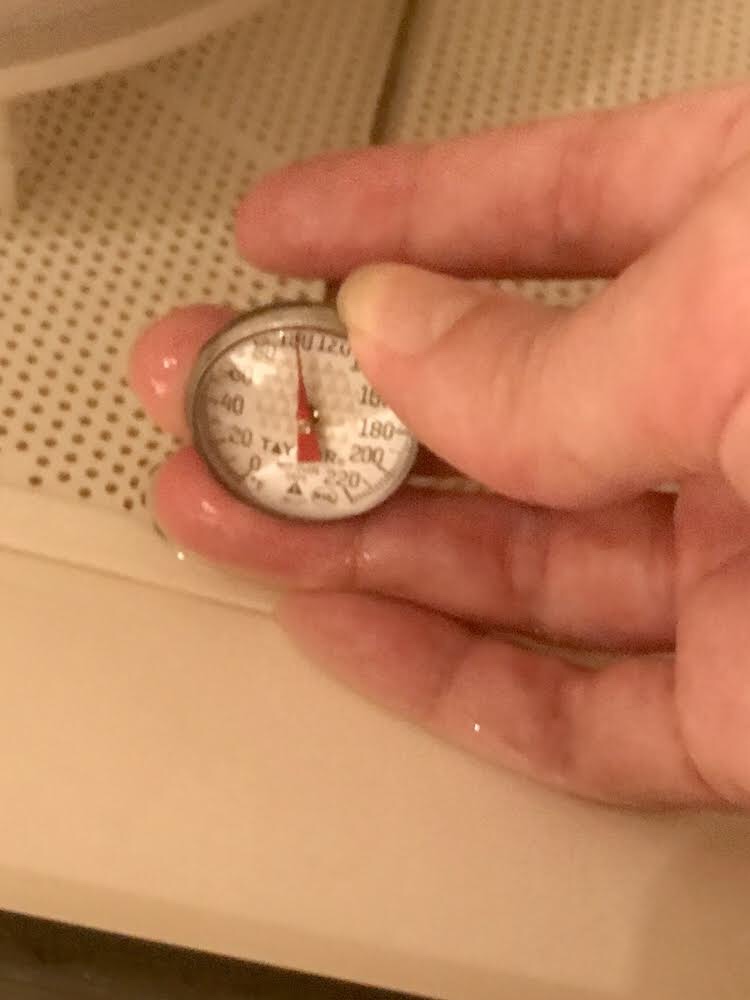
So that made a pretty clear case to the management company, who were then very accommodating about turning up my hot water heater.
Use the dishwasher settings that allow you to get the hottest water
Technically, the maintenance person was only really able to get the water up to 118 degrees, so I didn’t want to take any chances.
I now use the “Hot Wash” and “Hot Start” options. “Hot Wash” gives an extra heating boost to the water throughout, whereas “Hot Start” adds some time to the beginning of the cycle to flush any older, cold water out of the pipes before the dishwasher really gets started.
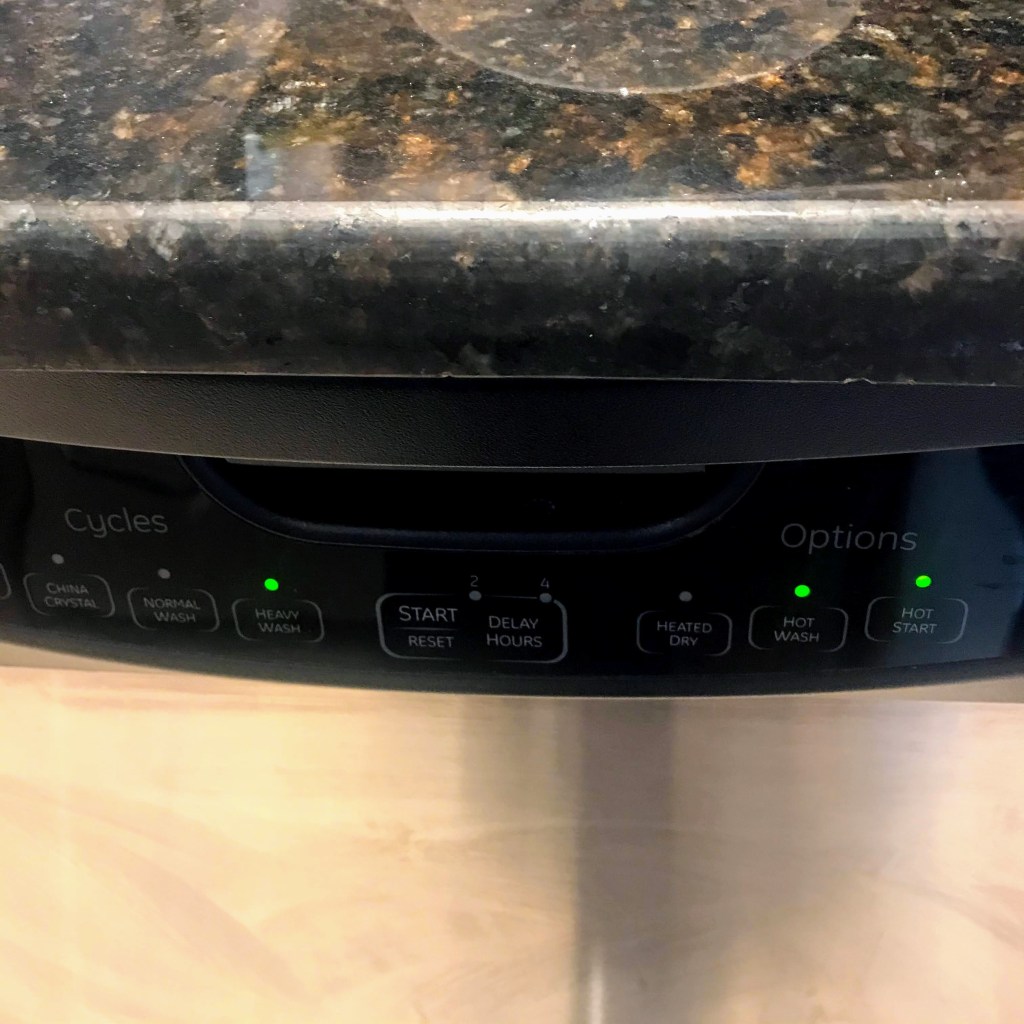
I also select “Heavy Wash,” rather than normal. Unfortunately, I’m sure this is costing me more than to run it without these options, but I found I really had to use all of these to get my dishes to come out clean. And it’s certainly cheaper to run the dishwasher once, effectively, than to run it multiple times, as I was doing.
Use less detergent
I found that the other main reason why people might be finding detergent left on their things is actually if they’re using too much detergent.
Pods, while convenient, can actually contribute to this, since it’s basically always the largest possible amount, every time you wash the dishes.
Over time, especially, I read that this excess detergent can actually build up on the inside walls of the dishwasher and then re-release more sludge every time.
So, based on all the recommendations of everyone in the groups, I actually settled with Seventh Generation Liquid Detergent, and found it really is as effective, yet mild, as everyone said.
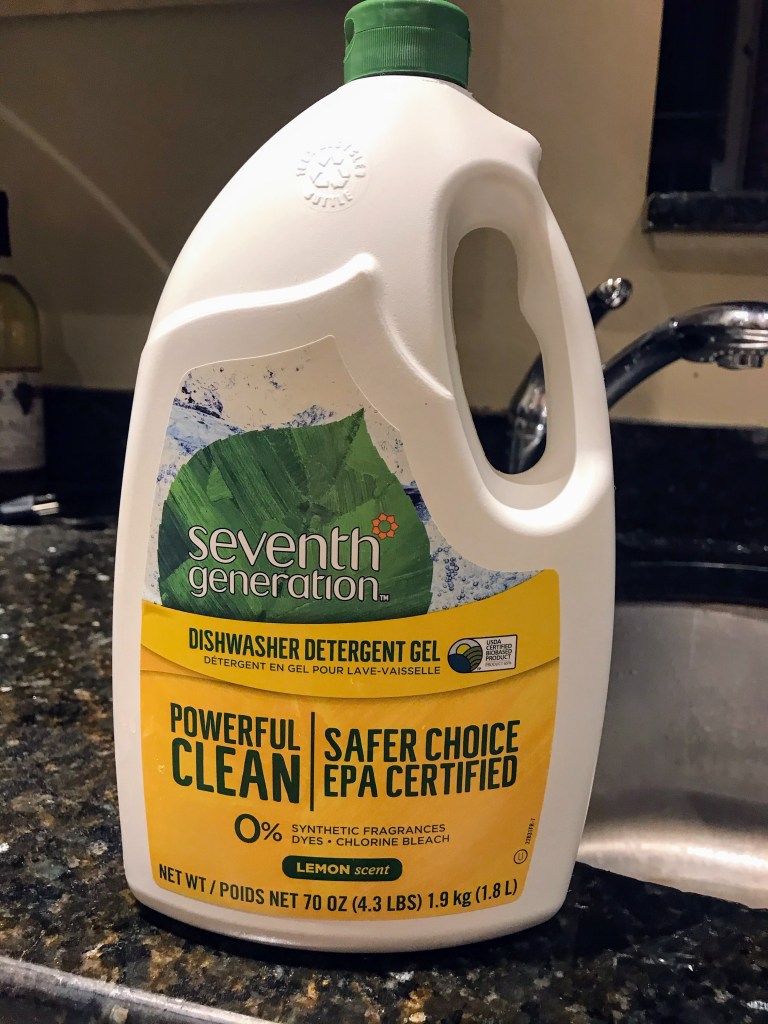
Now, when I go to run my dishwasher, I only fill the detergent cup between 1/2 and 3/4 of the way. My things still get clean and I’ve seen for myself I don’t really need more.
Rinse Aid
I’m currently using Finish Jet-Dry, although once the compartment is empty, I’m thinking of switching to the Seventh Generation version for that as well.
All the articles I found stressed that rinse-aid is actually important, especially if you have hard water (which I do) as it helps water (and any remaining detergent) bead up and run off your dishes at the end.
Clean the inside of the dishwasher
Here’s the thing. I got all of this other stuff in place, but the problem still wasn’t solved until I cleaned off the slime that was already in place.
I honestly tried a bunch of products, including the Lemi-Shine dishwasher cleaner which I saw people in these groups mention. Unfortunately, in my particular dishwasher, this really didn’t solve the problem.
You know what ultimately did solve it? White vinegar.
Not only did I find a bunch of articles online recommending this, but the official GE user’s manual for my machine also suggested vinegar, as well. (Who would have thought?).
What you do is you put about a cup of white vinegar in a bowl, and then place that bowl on the top rack and run the machine on empty.
I honestly had to do this 2 or 3 times, but I think that’s because my dishwasher was particularly bad.
You know what I really regret trying?
Baking soda.
I also found a bunch of articles which suggested doing the same thing with a cup of baking soda.
So tried it, and I really wish I hadn’t.
I didn’t notice a difference in the sliminess on the sides of the machine, but I did find a grittiness that lingered through the next through cycles, and ended up putting deep gouges into my Pyrex dishes, at which point I had to throw them out.
But overall, this is what it took to really solve the issue.
Once I had raised the water temp, switched to liquid detergent, and then thoroughly cleaned the inside of the dishwasher, I noticed the slime was about 90% gone.
It took a few more weeks to get rid of that last 10%.
I think part of the problem is that some of that slime, from too much grease, food particles, and undissolved soap had built up inside of the hose that ran from the dishwasher to the pipes under the sink (that’s where water enters and exits the dishwasher).
So even though I could clean the actual dishwasher itself with vinegar, it took a few more weeks of following my new “protocol” for that hose to be flushed out.
Once I did all of this, I went from thinking my dishwasher was a piece of garbage to feeling like I have a functional machine again.
But I’m still being pretty careful about how I maintain it, because I don’t want to end up in this situation again.
My current dishwasher protocol:
- Using “Hot Start” and “Hot Wash” options to ensure water is at least 120 degrees, so it will be hot enough to fully dissolve the detergent
- Using liquid detergent, so I can match the amount of detergent to the amount of cleaning that needs to be done (rather than pods, using the maximum amount every time).
- I use Seventh Generation liquid detergent, which was recommended by a lot of people in patient support groups as being very mild. Based on my own experience, I agree.
- Using Rinse-Aid
- Cleaning dishwasher approximately once a month by running one cup vinegar through, to remove build-up
And, lastly to address the problem that really started this mess:
- Switching back to paper towels for grease and oil
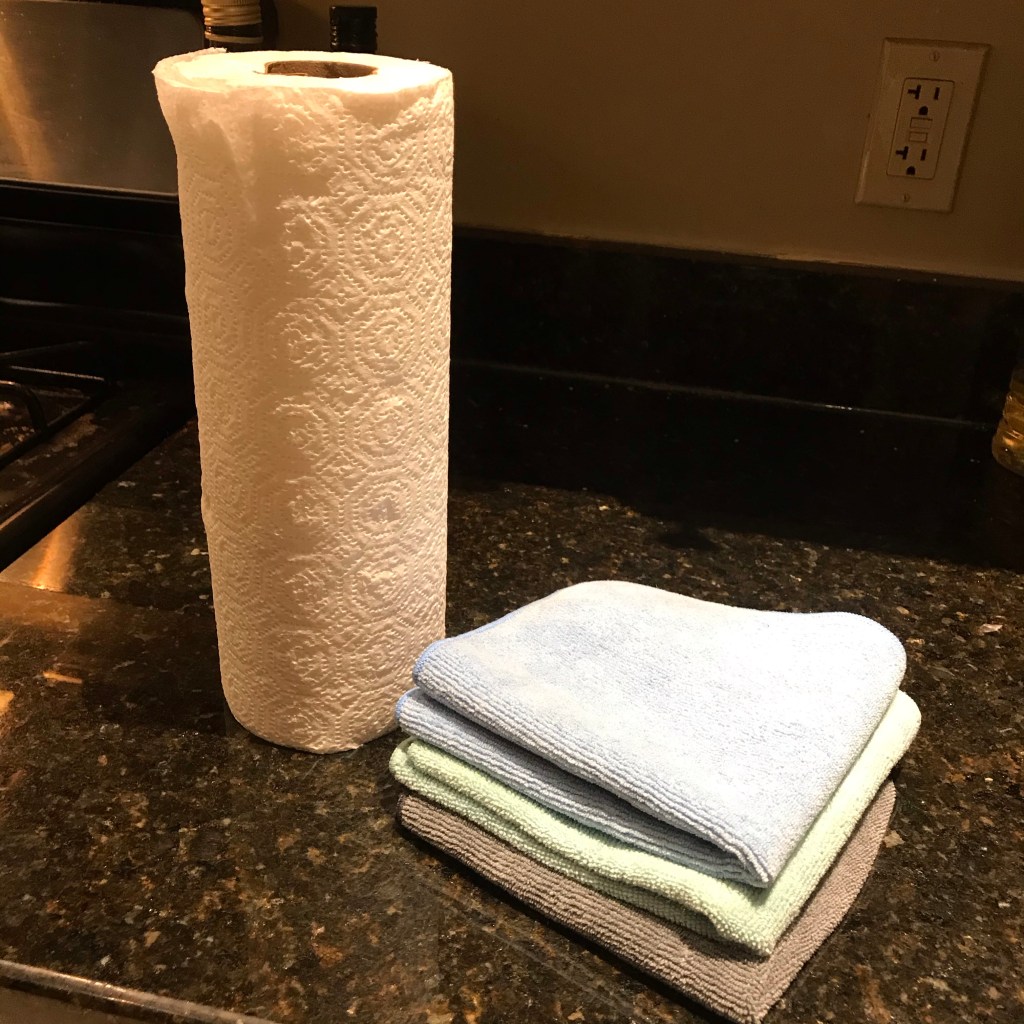
I really thought it would be cool to be one of those people who says I “never” use paper towels, but it just didn’t work here.
Without paper towels to actually sop the oil out of a pan after trying something, I ended up either putting too much grease down the drain, into the dishwasher, or into the washing machine (a topic for another post).
Detergent is meant to break up grease and disperse it, but it can only handle so much.
So I found all these other steps helpful, but at the end of the day, I also really had to strike a balance between cloths and paper towels.
Okay… I guess the fact that I’m excited about figuring all this out means I am officially old.
But hey, I care about the environment… and self-sufficiency… and being able to drink out of a cup without my throat hurting.
So I figured out the solution, and I’m calling that a win :).
 Mast Cell Healing